Jet Ski Rental Safety Guide for First-Timers
A jet ski looks easy right up until the moment you hit the throttle harder than expected and feel the machine jump forward under you. That first burst of speed is exactly why a good jet ski rental safety guide matters. The ride should feel exciting, not chaotic, and a little preparation goes a long way toward making your time on the water smooth, confident, and genuinely fun.
For most renters, the goal is simple: show up, get briefed, ride, and make great memories. But jet skis are powerful watercraft, not pool toys. Whether you are planning a date, a birthday outing, or a high-energy afternoon with friends, safety is what keeps the experience premium. When everyone knows what to do, the ride feels better from the first minute to the last.
What to know before your jet ski rental
The safest ride usually starts before you ever step onto the dock. Wear what makes movement easy and keeps you comfortable once you are wet. Secure swimwear, a rash guard or athletic top, and sunglasses with a strap tend to work better than anything loose or fussy. Flip-flops are fine for the dock, but they are not always ideal once you are balancing and boarding.
It also helps to arrive with the right mindset. If you are tired, hungover, distracted, or trying to impress your group, you are more likely to make fast, sloppy decisions. Jet skiing is more fun when you treat it like a real activity, not a prop for photos. You can absolutely get the photos, but control comes first.
Pay attention during the rental briefing, even if you have ridden before. Every location, waterway, and rental operation has its own rules, riding zones, and traffic patterns. On a busy summer day, local conditions matter as much as your previous experience.
The jet ski rental safety guide basics every rider should follow
The first rule is simple: wear the life jacket correctly, every time. Not loose, not half-zipped, and not treated like an accessory. A properly fitted life jacket gives you buoyancy, but it also gives you peace of mind if you fall unexpectedly.
The second rule is understanding the safety lanyard, sometimes called the engine cutoff cord. This attaches to you so the engine stops if you fall off. That one small step prevents the craft from continuing without a rider, which protects both you and everyone around you.
Then there is throttle control. New riders often assume the biggest risk is going too slow. In reality, trouble usually starts with abrupt acceleration, sharp turns at the wrong speed, or not leaving enough room to react. Smooth inputs are better than dramatic ones. Ease into speed, learn how the craft responds, and build confidence gradually.
Spacing matters too. Jet skis need room. Following too closely is one of the most common mistakes renters make, especially in groups. If the rider ahead slows down, turns, or bounces unexpectedly in choppy water, you need enough distance to respond without panic.
How to ride with more control, not just more speed
A lot of first-time riders think balance is the hard part. Usually, judgment is the harder skill. The best riders are not the ones flying across the water at top speed. They are the ones who stay aware of their surroundings, adjust to conditions, and avoid forcing the craft into situations it should not be in.
Start at a moderate speed until you get comfortable with steering, throttle response, and the feel of the water. Calm water can change quickly with boat wake, wind, and traffic. What felt easy one minute can feel very different after a larger vessel passes through.
Turns should be deliberate. If you whip into a turn without understanding your speed, the craft can slide wider than you expect. If you slow too much and turn awkwardly, you may lose momentum and feel unstable. There is a sweet spot, and you find it by staying smooth, not aggressive.
Keep your knees slightly bent and your grip relaxed. A death grip on the handlebars usually makes riders more tense, not more secure. Let the craft move beneath you a bit. You are guiding it, not wrestling it.
Water conditions can change the whole experience
This is where a practical jet ski rental safety guide becomes more than a checklist. Conditions decide how adventurous your ride should be.
On a calm, clear day, riding may feel intuitive within minutes. Add wind, chop, heavier traffic, or colder water, and the same ride becomes more demanding. That does not mean you cannot enjoy it. It means smart riders adjust expectations. Sometimes the best call is cruising confidently instead of pushing for speed.
Visibility matters as much as wave height. Glare, haze, and crowded waterways can reduce reaction time fast. If you cannot clearly see where you are going or what is around you, slow down. There is no style point for charging ahead when the safer move is obvious.
If you are riding in a place with mixed traffic, stay especially alert around larger boats. They are less nimble, create stronger wake, and may not be able to change course quickly. Give them room and avoid cutting across their path.
Common mistakes renters make
Most jet ski incidents do not come from wild stunts. They come from ordinary mistakes that stack up.
One is overconfidence. A rider feels good after five or ten minutes and starts treating the craft like a toy instead of a machine. Another is distraction. Talking to friends, looking back, fixing hair, waving for a camera – all of that can wait a second. On the water, a second matters.
Another common issue is ignoring fatigue. Riding looks effortless, but it takes focus and physical control. After enough bouncing over wake and wind, reaction time slips. If you start feeling tired, sore, or mentally checked out, slow the pace and reset.
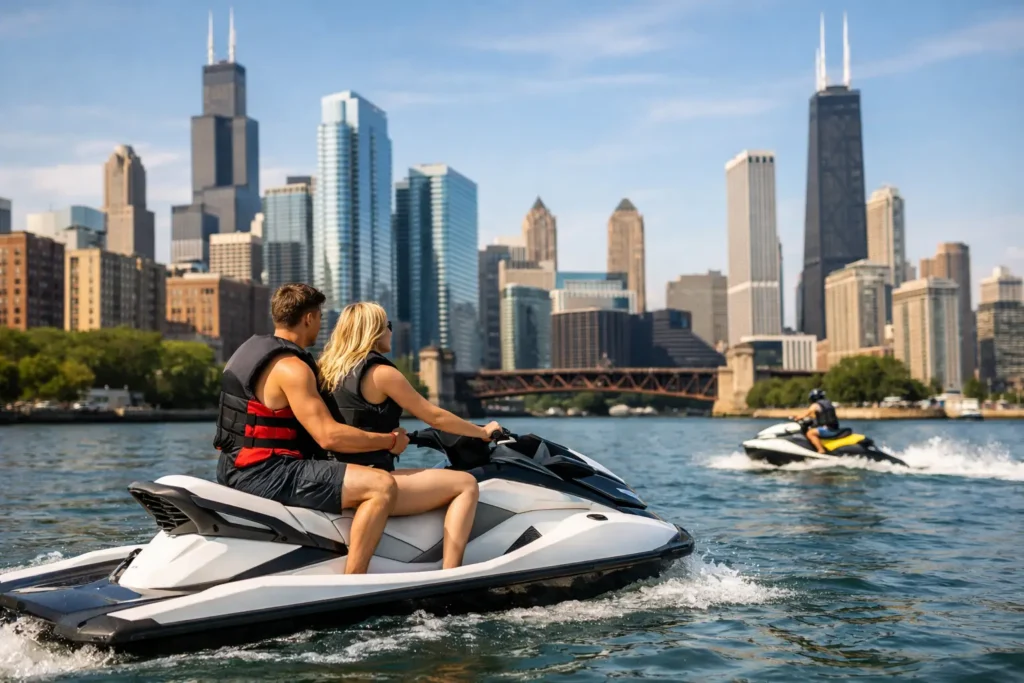
Passengers can also change the handling of the craft. If you are riding with someone, both people should understand how to sit, hold on, and move with the jet ski. Sudden shifting or leaning the wrong way can make the ride less stable, especially during turns or when crossing wake.
Group rides and celebration outings need extra awareness
Jet ski rentals are often part of bigger plans – birthdays, bachelor and bachelorette weekends, date days, or a summer outing with friends. That energy is part of the fun, but group excitement can create avoidable risk if nobody resets the tone before riding.
The safest group is not the quietest group. It is the group that listens, leaves space, and does not turn the ride into a competition. Racing your friends, weaving too close, or trying to show off near the dock can ruin the day quickly.
If your outing includes first-timers and more experienced riders, the experienced people should set the standard, not raise the chaos level. Good group etiquette keeps everyone relaxed and makes the whole experience feel more elevated. That matters if you are booking a premium day on the water and want it to feel polished from start to finish.
What to do if you fall off
Falling off can feel dramatic, but it does not have to become a problem. Stay calm, make sure you are okay, and orient yourself before rushing to reboard. Your life jacket is there to keep you afloat while you get settled.
Approach the craft as instructed during your safety briefing, usually from the rear, and use the boarding step or handholds if available. Trying to climb back on from the side often makes the jet ski tip more than necessary. If you are riding with a passenger, reboarding may take a little coordination, so communicate before both of you start scrambling.
If the craft will not restart or something feels off, signal for assistance rather than improvising. Confidence is good. Guessing is not.
Choosing a rental company matters
A quality rental experience feels organized before you ever touch the water. Clear instructions, well-maintained equipment, proper life jackets, and staff who take the briefing seriously are all part of the product. Safety and luxury are not opposites. The best experiences deliver both.
That is especially true in a busy destination where conditions and traffic can shift throughout the day. A professional operation helps you understand the riding area, local rules, and what kind of experience fits your skill level. That guidance is part of what makes a ride feel worth booking.
If you are planning a special outing, it is worth choosing a company that treats the day like an experience, not just a transaction. DorSea Tours is built around exactly that kind of premium, easy-to-book time on the water, where fun starts with good preparation and smart hospitality.
A jet ski ride should leave you energized, smiling, and ready to do it again. The best way to get that kind of memory is not by pushing your luck. It is by riding with control, staying aware, and giving the water the respect it deserves.